Dodoma. A landmark national survey has revealed that only 26 percent of women in Tanzania believe they should have the freedom to make their own economic decisions, exposing entrenched gender inequalities despite ongoing efforts to promote empowerment and social transformation.
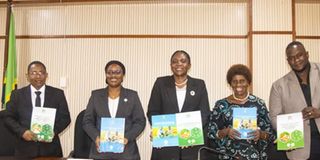
The findings were unveiled on Wednesday, May 7, 2026, in Dodoma during the launch of the Women’s Empowerment and Nutrition Survey (WEN) 2023/24 and the Tanzania Gender and Environment Survey (TGES) 2025, conducted by the National Bureau of Statistics (NBS).
The two studies, launched by the Minister for Community Development, Gender, Women and Special Groups, Dr Dorothy Gwajima, are the first of their kind in Tanzania, while the Gender and Environment Survey becomes only the second such study conducted in Africa after Senegal.
“These studies provide evidence on the challenges facing our society, opportunities for empowerment, and how environmental issues affect women and men differently,” said Dr Gwajima.
“Another unique aspect of these studies is that they help explain who is most affected, how they are affected, and why. Ultimately, this enables the government, stakeholders, and communities to take deliberate action through targeted policies and programmes,” she added.
The surveys paint a troubling picture of women’s autonomy and participation in decision-making despite progress recorded in some areas.
According to the WEN survey, only 26 percent of women nationwide believe women should have the freedom to make decisions regarding their economic activities.
Zanzibar recorded a significantly higher rate of 44.9 percent compared to 23 percent in Mainland Tanzania.
The study further found that only 34.1 percent of women support women’s freedom to make decisions related to marriage, divorce, and childbirth.
More than half of the women surveyed, about 54.6 percent, rejected all forms of gender-based violence.
Zanzibar recorded the strongest opposition to violence against women at 74.9 percent compared to 53.7 percent on the Mainland.
Dr Gwajima said the findings clearly demonstrate the urgent need for intensified public awareness campaigns and education programmes to strengthen women’s understanding of their rights.
“The results clearly demonstrate the need to increase awareness and education to strengthen women’s understanding of their rights to make economic, marital, and reproductive decisions,” she said.
“Deliberate efforts must also be directed towards areas with low levels of empowerment to reduce regional disparities,” added the minister.
The survey further revealed significant gender gaps in financial power and community influence.
While women showed stronger influence over time-use decisions at 43.3 percent compared to 39.4 percent for men, men continued to dominate financial decision-making at 54.8 percent against women’s 39.6 percent.
Women also remain underrepresented in formal leadership and decision-making spaces despite their active participation in social groups.
The report showed that nearly 47.5 percent of women participate in at least one social group, almost equal to men at 50.7 percent.
However, women are more concentrated in informal savings and religious groups, while men dominate formal institutions.
Only nine percent of women said they felt capable of speaking out and being heard effectively in society, compared to 26 percent of men.
On access to resources, 58 percent of women use financial services compared to 72 percent of men.
Although 40 percent of women own some form of asset, only one-third possess formal ownership documents.
The Tanzania Gender and Environment Survey, meanwhile, revealed that the effects of climate change are affecting women and men differently, with women appearing slightly more vulnerable.
At least 82.9 percent of women and 80.8 percent of men in Mainland Tanzania reported experiencing at least one climate change-related impact.
Chief Government Statistician, Dr Amina Msengwa, described the two surveys as critical tools for measuring Tanzania’s progress towards the Sustainable Development Goals and strengthening evidence-based planning.
“The findings of these two surveys are uniquely important in shaping and improving national policies and plans,” said Dr Msengwa.
She said the reports should be treated as strategic instruments for strengthening development programmes in nutrition, agriculture, poverty reduction, women’s empowerment, and environmental conservation.
NBS Board Chairperson, Ms Anne Makinda, said the Women’s Empowerment and Nutrition Survey had filled a long-standing statistical gap linking women’s empowerment with nutrition outcomes.
“For a long time, there has been a shortage of data showing the relationship between women’s empowerment and nutrition outcomes. The WEN survey has transformed this area,” said Ms Makinda.
“It provides strong nationally representative evidence that when women are empowered, households achieve food security, better nutrition, and economic resilience. This is not just a gender issue, but a pillar of national development,” she added.
Register to begin your journey to our premium contentSubscribe for full access to premium content