Dar/Songwe. Tanzania’s sesame farmers have high expectations as the country launches the 2026/27 trading season on May 8, 2026, in Songwe Region.
The expectations are anchored in both higher production volumes compared with last year, following efforts by government authorities, particularly the Crops and Other Produce Regulatory Authority (COPRA), as well as hopes for improved prices.
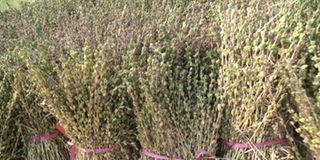
However, despite these hopes, sesame trading is increasingly being shaped by powerful global forces, including shifts in Chinese demand and intensifying competition from emerging producers.
Reports indicate that these changes, together with rising international logistics costs, are redefining earnings for thousands of smallholder farmers across the country.
Although Tanzania remains one of Africa’s most reliable suppliers of high-quality sesame seed, the sector now operates in a market environment where price formation is largely determined outside its borders, exposing domestic producers to external shocks that quickly ripple from global trading hubs into rural farm-gate prices.
Recent data show that the global sesame economy is structured around a narrow but highly influential group of buyers and producers, with Asia remaining the epicentre of demand.
China continues to dominate as the single most important market, importing between 900,000 and 1.1 million tonnes annually, mainly for oil extraction, food processing, confectionery production and strategic reserves.
Japan follows with imports of 150,000 to 170,000 tonnes, largely premium-grade sesame used in food processing and roasted products.
Turkey imports between 140,000 and 160,000 tonnes for tahini and halva manufacturing, while India absorbs between 100,000 and 130,000 tonnes, much of it for cleaning, processing and re-export to high-value markets.
South Korea imports between 70,000 and 90,000 tonnes, mainly through structured tenders, while Israel consumes 50,000 to 65,000 tonnes.
The United States imports about 45,000 to 55,000 tonnes, largely for bakery and processed food industries, while Vietnam’s rapidly growing food sector now absorbs 35,000 to 50,000 tonnes annually.
On the supply side, Sudan leads global production at an estimated 1.25 million tonnes in 2025, followed by India (850,000 tonnes), Brazil (400,000 tonnes) and Ethiopia (380,000 tonnes).
Tanzania, while smaller in volume, remains strategically important due to its reputation for relatively high oil content and consistent seed quality.
Analysts say this structure creates a “buyer-dominated pricing system”, where African producers have limited influence over global rates despite being the backbone of physical supply.
Volatility and recovery
Tanzania’s sesame production has fluctuated significantly over the past five years, reflecting both climatic pressures and changing incentives in rural farming systems.
Official agricultural statistics show output declining from 236,162 tonnes in 2020/21 to a low of 79,170 tonnes in 2021/22, before rebounding strongly to 266,994 tonnes in 2022/23 and stabilising at around 240,010 tonnes in 2023/24.
The most recent season recorded 257,040 tonnes in 2024/25, signalling a modest recovery as the 2026/27 production is expected to increase following government initiatives to supply better seeds and agricultural inputs to farmers.
Despite this rebound, agricultural experts warn that production stability remains fragile due to erratic rainfall patterns, rising input costs and soil exhaustion in long-established farming zones.
Lindi continues to dominate national output, contributing 75,759 tonnes valued at Sh221.5 billion in 2025.
Coast Region follows with 27,381 tonnes (Sh75.2 billion), Morogoro with 26,055 tonnes (Sh66.9 billion), Mtwara with 22,697 tonnes (Sh64.2 billion) and Dodoma with 20,565 tonnes (Sh56.2 billion).
Collectively, total production value across all regions reached about Sh595.6 billion.
Officials say these figures underscore sesame’s continued importance as one of Tanzania’s key export cash crops alongside cashew nuts and coffee.
Price pressure and market decline
Price trends, however, present a more worrying picture for producers. Average sesame prices stood at around Sh3,000 per kilogram in 2023/24, rose slightly to Sh3,144 in 2024/25, before dropping sharply to Sh2,329 in 2025/26.
Early projections for the 2026/27 season indicate stability despite the fact that they will solely depend on market forces of supply and demand, especially in the international sphere.
Agricultural economists attribute this decline to a combination of global oversupply, increased production in competing countries and weakening demand growth in key markets such as China, where stockpiling cycles have become less aggressive than in previous years.
“The sesame market is no longer driven by scarcity but by competition. When Brazil expands production or Sudan recovers output after instability, prices in Tanzania adjust almost immediately,” says an expert on condition of anonymity.
Freight costs and geopolitical shocks
A major emerging pressure point is logistics, whereas instability in the Red Sea and the broader Middle East has significantly increased shipping insurance premiums and freight charges, particularly for cargo routed through Dubai, a key global aggregation hub for sesame exports.
Exporters say freight costs have risen by double-digit margins on several routes, forcing traders to anticipate steeper competition in Asian and European markets.
“The transport component is now a decisive factor in pricing structures,” says a Dar es Salaam-based exporter.
“Even when global demand remains stable, higher freight costs reduce what ultimately reaches farmers,” insisted the expert.
The role of China as the market anchor
China continues to dominate global sesame demand, not only as the largest importer but also as a benchmark setter for international pricing.
Tanzanian exports to China fluctuate between bulk oil-grade sesame and higher-quality seed destined for food processing industries.
Experts note that China’s dual demand structure, industrial oil extraction and premium food consumption mean it effectively influences both low-end and high-end global price segments simultaneously.
However, Brazil’s increasing penetration into the Chinese market is reshaping trade dynamics.
With lower production costs driven by mechanised farming systems and favourable trade agreements, Brazil has begun to erode Africa’s traditional pricing advantage.
Despite intensifying competition, Tanzania retains a comparative advantage in sesame oil content, which often exceeds 50 percent, making its produce attractive to premium buyers in Japan and niche European markets.
A senior industry expert said global buyers are broadly divided into two categories: bulk purchasers and premium buyers.
“China and similar markets buy in large volumes mainly for oil extraction, while countries like Japan prioritise cleanliness and uniformity for direct food consumption,” said the source.
The source added that Tanzania has strengthened its position in the Japanese market following improvements in quality control systems and post-harvest handling practices.
Digital markets and structural reforms
The introduction of digital auction systems and warehouse receipt frameworks has improved transparency in the domestic sesame trade, reducing the influence of middlemen and enhancing price discovery mechanisms.
Farmers are now reported to receive between 70 and 80 percent of global parity prices, depending on grade and timing of sales.
Authorities say the system is designed to ensure fairness through competition rather than administrative pricing.
However, analysts caution that while transparency has improved, exposure to global volatility remains unchanged.
Value addition
University of Dodoma lecturer Lutengano Mwinuka says Tanzania must urgently shift from raw exports towards value addition if it is to stabilise farmer incomes.
“Exporting raw sesame exposes producers directly to global price shocks,” he said.
“Without processing into oil, paste, or packaged food products, Tanzania will continue to be a price taker,” added Dr Mwinuka.
He added that global consumption trends increasingly favour traceable, processed and branded sesame products, particularly in Europe and parts of Asia where food safety regulations are tightening.
What farmers say
At the grassroots level, farmers say that falling prices and rising production costs outweigh the benefits of improved market systems.
In Songwe’s Chang’ombe village, farmer Vicent Msawila said sesame has become an important income source but remains unpredictable.
“Between 2022 and 2024, prices reached up to Sh4,000 per kilogram, but last season they dropped to around Sh2,400,” he said, noting that many farmers struggled to repay agricultural loans taken for inputs. Other farmers cite rising costs of land preparation, chemicals, labour and transport, which they say are eroding profitability even when yields improve.
Despite current pressures, analysts remain cautiously optimistic about the long-term outlook.
Global demand is expected to remain strong, particularly in Asia and the Middle East, but price volatility is likely to persist due to supply expansions in Brazil, Sudan and Ethiopia.
For Tanzania, the next phase of competitiveness will depend on improved productivity, reduced post-harvest losses and increased value addition through processing industries.
As one market analyst insists, “Tanzania has a clear quality advantage, but the global sesame trade is now defined by efficiency, scale and logistics, not just production,” said the analyst.
For thousands of farmers across Lindi, Mtwara, Songwe and other regions, the challenge is no longer simply how much sesame they produce, but how well they can adapt to a global market that is becoming increasingly competitive, complex and unforgiving.
Statement from COPRA
Speaking to The Citizen, COPRA director general Irene Madeje Mlola said essentially, all preparations have already been completed following the recent stakeholders’ meeting.
“The guidelines remain largely similar to last year, although we have slightly increased transport levies due to ongoing global conflicts,” she said.
In terms of management, he said the board has put in place rigorous supervision involving regional, district and council officials, alongside the cooperative union.
“We have agreed on joint monitoring to address previous challenges, particularly ensuring that cargo is clean. We have also introduced a provision allowing buyers to visit warehouses to inspect stock before bidding begins,” she said.
“This transparency, supported by video documentation of the cleaning process, will help buyers verify that the cargo matches the catalogue,” he said over the phone.
The commodity exchange is expecting an increase in buyer participation this year. For the exact tonnage available for the first auction on May 8, you should contact the Songwe Regional Cooperative Union (Sorecu), as collections are still being finalised today.
Remarks from Songwe Cooperative Union
Speaking during the sesame industry stakeholders' forum alongside the opening of the sesame season, Songwe Regional Cooperative Union (Sorecu) director Daudi Andrew Slahhi said that in the 2026/2027 season, the union has taken various steps to address challenges that emerged last season, alongside continuing to improve services for farmers and primary societies.
Mr Slahhi said those improvements aim to ensure farmers benefit properly from the warehouse receipt system, while emphasizing that the union has been prepared to increase efficiency in the collection, storage and selling of crops especially sesame.
He said that in this season, a total of 12 warehouses will be used, compared to nine warehouses used last year; aimed to reduce the challenge of crops staying outside during auction due to a shortage of space in warehouses.
He clarified that the Momba district will have three warehouses while the Songwe area will have 10 warehouses for collections, adding that the use of digital scales will be emphasized to increase transparency and efficiency in the weighing of crops.
Songwe district commissioner Fadhiri Nkulu said the region has an area suitable for farming various crops of 1.9 million hectares, 85.6 percent hectares are suitable for farming the sesame crop.
He said production per one hectare, it should produce 1.5 tonnes, but currently 0.5 tons are produced different from the government's goals.
Mr Nkulu emphasized the importance of the warehouse receipt system in ensuring farmers get deserving prices, reliable markets and increasing the value of their crops.
The crop’s future
Regarding the crop’s outlook, Ms Mlola said the authority would scale up investment in the distribution of quality seeds and agricultural inputs, while improving the efficiency of extension services.
“We will also increase investment in enhancing the quality of sesame produced in the country by providing grading machines so that final products entering the market comply with the grades preferred by buyers,” she said.
Register to begin your journey to our premium contentSubscribe for full access to premium content