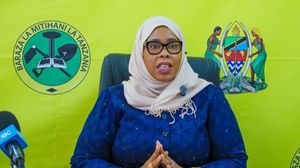
Tanzania joins over 170 nations at UNEA-7 to drive action on the global environmental crisis

UNEA-7 President, Abdullah Bin Ali Amri

What you need to know:

  • The Assembly is expected to adopt a ministerial declaration and approve the United Nations Environment Programme’s (UNEP) Medium-Term Strategy for 2026–2029, which will define global environmental priorities for the next four years.

Nairobi. Tanzania has joined more than 170 countries in Nairobi, Kenya, for the seventh session of the United Nations Environment Assembly (UNEA-7), as the world confronts escalating environmental emergencies and approaches critical ecological thresholds, according to scientists.

UNEA-7 is considering 15 draft resolutions and two draft decisions. Although these outcomes are not legally binding, they regularly shape major multilateral environmental agreements and influence global policy direction.

The Assembly is expected to adopt a ministerial declaration and approve the United Nations Environment Programme’s (UNEP) Medium-Term Strategy for 2026–2029, which will define global environmental priorities for the next four years.

The meeting, running from December 8 to 12, 2025, is the world’s highest-level environmental decision-making forum and has attracted nearly 6,000 participants, including ministers, scientists, business leaders, youth representatives and civil society organisations.

Opening the session, UNEP Executive Director Inger Andersen said the Assembly must move decisively towards practical, science-based action.

“We have the right ideas on the table,” she said, emphasising that many of the draft resolutions directly address the most severe environmental challenges facing the world.

Her remarks highlighted key agenda areas, including artificial intelligence, sustainable minerals and metals, antimicrobial resistance, the global hydrological cycle, deep-sea ecosystems, and chemicals and waste management.

Ms Andersen stressed that UNEA is not only a negotiating forum but also a platform for generating momentum and delivering solutions. “This is where the world gathers beyond the negotiating halls to bring new ideas and accelerate environmental action,” she said.

The meeting aims to guide countries towards concrete commitments that strengthen environmental governance, improve coordination among multilateral environmental agreements and speed up implementation.

As part of the UN80 reform initiative, discussions are advancing proposals to streamline reporting requirements and reinforce global cooperation.

“We are working to strengthen the global system of environmental governance,” Ms Andersen said, noting that improved coordination would enable faster and more effective responses to environmental threats.

For Tanzania, several draft resolutions are of direct national importance. Deliberations on artificial intelligence are closely watched as countries seek to balance environmental benefits with the significant energy and resource demands of the technology. Tanzania, which is expanding the digitisation of climate and environmental data, expects these outcomes to guide national policy on responsible use of artificial intelligence.

The proposed resolution on sustainable minerals and metals is equally strategic. Tanzania is positioning itself as a major supplier of critical minerals, including nickel, graphite and rare earth elements, and stronger global frameworks are expected to reinforce environmental safeguards as investment in these sectors increases.

The global hydrological cycle is another priority area for Tanzania. Irregular rainfall, prolonged droughts and water-related shocks continue to disrupt agriculture and urban water systems across the country.

Management of chemicals and waste remains a serious challenge in rapidly growing urban centres. International alignment on chemical and waste policies is expected to help Tanzania access financing and technical support to advance its circular economy objectives.

Addressing delegates, the President of UNEA-7 and Head of Oman’s Environment Authority, Abdullah Bin Ali Al-Amri, said the Assembly must deliver decisions that define the world’s environmental direction.

He told delegates that “multilateralism delivers when science, solidarity and solutions are combined”, and said success would depend on adopting implementable resolutions supported by strong follow-up mechanisms, a unifying ministerial declaration and a well-resourced UNEP strategy that enables countries to deliver results.

He added that stronger coherence among multilateral environmental agreements, and equitable access to finance and technology, are essential to ensure no country is left behind in building a resilient planet.

While UNEA-7 will not generate legally binding commitments, its resolutions have consistently shaped global environmental priorities.

For Tanzania, the Assembly provides a strategic opportunity to advance national environmental interests while aligning with global action to restore ecosystems, reduce pollution and build a climate-resilient economy.