Dar es Salaam. The government is courting investors, entrepreneurs and development partners to tap into Tanzania's growing clean cooking sector as it seeks to mobilise Sh4.6 trillion needed to achieve its target of ensuring that 80 percent of Tanzanians use clean cooking energy by 2034.
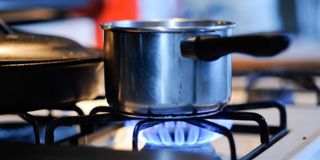
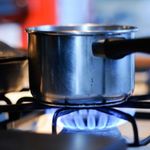
The investment will support implementation of the National Clean Cooking Strategy, which seeks to expand access to liquefied petroleum gas (LPG), electricity, biogas, improved cookstoves and other clean cooking technologies while reducing dependence on firewood and charcoal.
Speaking in an exclusive interview with The Citizen, Director of Clean Cooking in the Ministry of Energy Nolasco Roman Mlay said the government had developed a 10-year implementation strategy but could not finance it through public resources alone.
"As the government, we have prepared a 10-year strategy. To implement it, we require nearly Sh4.6 trillion. We cannot achieve this through the government budget alone if we rely only on public funding. That is why we are working with various development partners to mobilise the required resources," she said.
He linked the financing need to discussions held during the Tanzania Clean Cooking Strategy Retreat in London, where officials said the country requires about $1.8 billion to finance awareness campaigns, infrastructure, technology, innovation, distribution and capacity building.
He noted that 94 percent of the funding would go towards infrastructure such as LPG terminals, biogas plants, briquette production facilities and improved cookstove workshops.
However, less than 30 percent of the $800 million pledged under the Tanzania Energy Compact has been mobilised, leaving a financing gap of more than $560 million.
He said the funding gap presents opportunities for businesses across the clean cooking value chain.
"The biggest challenge is affordability. Many citizens cannot afford the initial cost of electric cookers or LPG cylinders. That is why the government has removed some taxes to make these products more affordable," she said.
The government has also introduced subsidies, including a 50 percent subsidy for 452,445 LPG starter packs and an 85 percent subsidy for 200,000 improved cookstoves to accelerate adoption, particularly among low-income and rural households.
He said opportunities exist in fuel distribution, manufacture of improved cookstoves, production of alternative charcoal, transport and logistics, technology development and carbon trading.
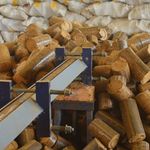
He noted that Stamico is looking for distributors of Rafiki Briquettes, while LPG companies also need agents to expand their distribution networks into rural communities.
He encouraged women's groups and youth organisations to produce alternative charcoal from agricultural waste and coconut husks and manufacture improved cookstoves using locally available materials.
He also urged innovators to develop technologies such as pay-as-you-go systems and on-bill financing to help households spread the cost of purchasing clean cooking appliances.
He said women's savings groups had been among the first to embrace the opportunities, with many receiving training from the Rural Energy Agency (REA), the Small Industries Development Organisation (Sido) and the Tanzania Industrial Research and Development Organisation (Tirdo) to produce improved cookstoves and alternative charcoal.
"Youth have also not been left behind. Many have accessed loans to establish businesses in the clean cooking sector and are already taking advantage of these opportunities," he said.
He said implementation of the strategy continues to benefit from support by development partners. Through the CookFund programme, the United Nations Capital Development Fund (UNCDF) has helped about 100 institutions adopt clean cooking technologies while providing grants to nearly 100 entrepreneurs to expand their businesses.
The Modern Energy Cooking Services (MECS) programme has also partnered with the ministry to promote electric cooking through awareness campaigns and training technicians to repair modern cooking appliances, while the World Food Programme (WFP) is supporting the introduction of clean cooking technologies in 36 schools.
Private companies are also expanding investment in the sector. Taifa Gas recently donated more than 300 LPG cylinders to women fish traders at the Ferry Fish Market in Dar es Salaam and announced subsidised six-kilogramme cylinders for students. Meanwhile, Oryx Gas Tanzania, working with the Doris Mollel Foundation, has distributed about 24,000 clean cooking solutions to women's groups after investing more than Sh2 billion.
Oryx Gas Tanzania Managing Director Benoit Araman said: "For the last 15 years, clean cooking solution access has been discussed and planned, but now it has become the topic of highest importance."
Energy Ministry engineer Anita Ringia said access to clean cooking had increased from 6.9 percent in 2021 to 28.6 percent in 2025, although more than 33,000 premature deaths are still recorded annually due to indoor air pollution caused by traditional cooking methods.
She said measures including tax exemptions, the distribution of 452,445 subsidised LPG starter packs, expansion of electric cooking and a ban on the use of firewood and charcoal in large institutions were accelerating the transition.
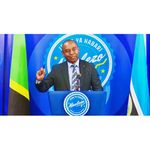
Permanent Secretary Felchesmi Mramba said achieving the target would require continued collaboration between government, development partners, businesses and communities.
"This is not just about energy. It's about health, environment and equity," he said.
Register to begin your journey to our premium contentSubscribe for full access to premium content