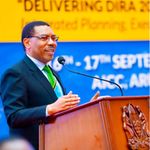
Dodoma. Tanzania’s water sector is entering a new phase anchored on water security, economic transformation, and sustainable service delivery, Water Minister Jumaa Aweso told Parliament on Tuesday, May 5, 2026.
He was presenting a Sh1.12 trillion budget for the 2026/27 financial year.
Tabling the estimates in Parliament in Dodoma, Mr Aweso said the ministry is shifting from a traditional focus on potable water supply projects to a broader strategic framework built on three pillars: national water security, water for economic growth, and sustainable service provision.
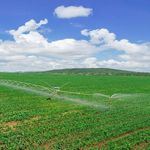
He said water security is now central to national stability and development, directly linked to food production, energy generation, and industrialisation.
Quoting President Samia Suluhu Hassan, he said: “No Blue, No Green; No Green, No Nation,” underscoring that reliable water resources are fundamental to Tanzania’s long-term development agenda.
The minister outlined seven key priorities that will guide the sector in the 2026/27 fiscal year, starting with the completion of the National Water Master Plan.
The plan is expected to provide a long-term blueprint for managing, developing, and investing in water resources while aligning supply with growing domestic and economic demand.
Alongside the master plan, the government will accelerate development of a National Water Grid, an ambitious initiative designed to connect major water sources, including lakes, rivers, dams, and groundwater systems, to serve households and key economic sectors.
Mr Aweso said the grid, which is already at various stages of implementation, ranging from completed projects to those under construction and design, represents a transformative vision aimed at ensuring equitable water distribution across the country.
He noted that Tanzania is well endowed with water resources, citing Lake Victoria and Lake Tanganyika as strategic national assets, and stressed that the grid will support multiple uses, including domestic consumption, agriculture, livestock, and industry.
Rainwater harvesting and strategic dam construction form another key pillar of the ministry’s agenda.
In the coming financial year, the government plans to construct and rehabilitate 33 dams, design 34 new ones, and drill 300 deep wells in water-scarce areas.
The measures, Mr Aweso said, are intended to mitigate drought and climate change impacts while ensuring year-round water availability.
The ministry also plans to complete 992 rural water projects, 196 urban projects, and 26 sanitation initiatives aimed at expanding access and improving service reliability.
Mr Aweso called on legislators, councillors, and contractors to strengthen on-site supervision to accelerate implementation.
A major focus will be on the remaining 1,575 villages without water services. Out of 12,333 villages nationwide, 10,758 are already served.
“This is a stain on a white shirt,” Mr Aweso said, declaring a nationwide drive to achieve universal access by 2030.
Invoking the legacy of the late Mwalimu Julius Nyerere, he said the government has the capacity, justification, and determination to complete the task.
In the 2026/27 financial year alone, he said, water services will be extended to 314 additional villages, with stakeholders including NGOs, civil society, and the private sector invited to participate.
He further said efforts to reduce water losses will be intensified through the adoption of modern technologies, including smart metering systems, digital monitoring, and prepaid water meters.
Mr Aweso issued a stern warning against water theft and vandalism of infrastructure, saying revenue leakages would no longer be tolerated, noting that some water authorities have already recorded significant reductions in losses.
Improving water access in schools and health facilities is also a priority, with the ministry working closely with the education and health sectors to ensure reliable supply in essential public institutions.
Beyond infrastructure development, Mr Aweso outlined institutional reforms aimed at strengthening human resources, expanding alternative financing mechanisms, and deepening private sector participation.
The government, he said, is preparing a Water Sector Bond to attract both domestic and international investors, while also strengthening the National Water Fund to support large-scale projects.
He pointed to ongoing partnerships with development partners and private investors, citing initiatives such as the Mpwapwa water project, which is being implemented with private sector involvement.
Mr Aweso also emphasised the role of technology in improving efficiency, including digital systems for meter reading, customer connections, and enhanced inter-agency coordination to optimise water use.
In a move aimed at improving customer service, Mr Aweso banned arbitrary water disconnections and inflated billing practices.
He ordered the immediate reconnection of customers who had been unfairly disconnected and directed water authorities to provide prior notice before any service interruption.
The minister stressed that water services must be consistent, warning against weekend and public holiday disconnections, and instructed that new connections should be completed within seven days.
The rollout of prepaid meters between 2026 and 2030, he said, will help reduce billing disputes, curb debt accumulation, and improve revenue collection.
“Citizens do not want empty talk; they want water,” he said, adding that the goal is to “remove the bucket from women’s heads and put smiles on citizens’ faces.”
Mr Aweso urged Parliament to approve the Sh1.12 trillion budget, of which more than Sh1 trillion is allocated to development expenditure, signalling a strong focus on infrastructure expansion and long-term water security.