TIE urges universities to align research with real-world challenges
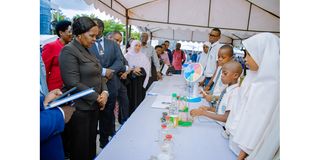
The Director General of the Tanzania Institute of Education (TIE), Dr Aneth Komba, inspects exhibitions during Innovation Week at the Dar es Salaam University College of Education.
Dar es Salaam. The Director General of the Tanzania Institute of Education (TIE), Dr Aneth Komba, has called on higher learning institutions to ensure that research, innovation and technology are directed towards addressing real-life challenges and supporting national development.
Dr Komba made the remarks on Thursday, May 21, 2026 while officiating the opening of the 11th Research and Innovation Week at the University of Dar es Salaam College of Education (DUCE), which brought together students, lecturers, researchers and stakeholders from the education sector.
She said sustainable development depends on investment in education, research, innovation and technology, alongside stronger community participation.
Dr Komba stressed that research should not remain in academic archives but must be translated into practical solutions that benefit society.
“Research and innovation should directly benefit society. We should not conduct research that ends up on shelves, but rather research that provides solutions to the challenges faced by citizens,” she said.
She added that the increased use of technology and digital systems is essential for improving efficiency and service delivery across sectors, including education, health, transport and the economy.
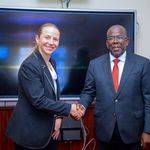
During her visit to the Global Education Link (GEL) pavilion, Dr Komba also expressed readiness to collaborate with DUCE, GEL and other stakeholders to strengthen career guidance for students and teachers, noting that career decisions should begin early in education.
“We need to ensure that children understand early what they want to become in life. Wrong decisions at an early stage can become major challenges later,” she said.
DUCE Acting Principal Prof Amani Lusekelo said 45 research projects have been presented under the programme, with some already adopted by local councils to improve services.
He said the initiative has strengthened collaboration between universities, government, the private sector and communities.
Global Education Link Executive Director Abdulmalik Mollel said many students choose careers based on perception rather than labour market demand.
He noted that while most PCB students aspire to become doctors, there is growing demand for other health professionals such as radiologists, physiotherapists, audiologists, speech therapists, dialysis specialists and dentists.
“This mismatch shows that students are not being adequately guided towards key professions,” he said.
The event is being held under the theme of promoting the use of mineral resources for renewable energy development, digital transformation and strengthening social security systems.