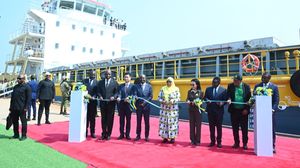
The groundbreaking marks one of the first major infrastructure projects under the revamp, signalling the transition from years of planning to implementation
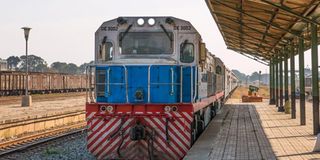
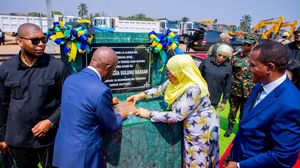
Dar es Salaam. The long-awaited revival of the Tanzania-Zambia Railway Authority (Tazara) has entered a new phase with the start of construction of a modern training centre and operations control centre in Dar es Salaam.
The groundbreaking marks one of the first major infrastructure projects under the $1.4 billion Tazara Railway Revitalisation Project, signalling the transition from years of planning to implementation.
The ceremony was officiated by Transport Permanent Secretary Godius Kahyarara and attended by China Civil Engineering Construction Corporation (CCECC) Chairman Li Chongyang Chinese Ambassador to Tanzania Chen Mingjian, Tazara Managing Director and Chief Executive Bruno Ching'andu, Vocational Education and Training Authority (VETA) Director General Adolf Rutayuga and other government officials and project partners.
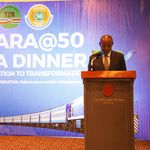
The event came days after Tazara celebrated its 50th anniversary under the theme, "TAZARA@50: From Liberation to Transformation."
Speaking during the ceremony, Prof Kahyarara said the commencement of construction demonstrated that the railway's revitalisation had moved from planning to implementation.
"The success of this project will ultimately be measured by improvements in railway performance, including safer operations, reliable passenger services, increased freight capacity, shorter transit times, better use of railway assets, improved customer service and stronger financial sustainability," he said.
He urged contractors to complete the project on schedule while maintaining high standards of quality and safety. He also stressed the importance of ensuring meaningful technology and skills transfer to Tanzanian railway professionals.
"These facilities are more than buildings. They represent an investment in the people, systems and operational discipline required to build a modern railway," he said.
A key component of the programme is the construction of a new Tazara Training Centre, which will occupy 21,800 square metres with a total floor area of 9,641 square metres.
The facility will include training laboratories, classrooms, conference facilities and offices to support technical, operational and management training.
Once completed, it will provide training for engineers, technicians, locomotive drivers, train controllers, station staff, safety officers and railway managers, while supporting continuous professional development and technology transfer.
The centre is expected to play a key role in preparing personnel to operate and maintain modern locomotives, wagons, communication systems and other infrastructure introduced under the revitalisation programme. The Government of China is financing its construction.
Chinese Ambassador Chen Mingjian said the facility had been designed to meet Tazara's operational needs and was expected to become a regional centre for railway vocational training and professional development.
She said the groundbreaking marked the start of an intensive implementation phase of the railway's revival.
"The renewed railway will strengthen regional trade, economic integration and support the development of the proposed Tazara Prosperity Belt," she said.
Alongside the training facility, Tazara is also constructing a modern Operations Control Centre that will serve as the railway's central command hub.
The centre will oversee train movements along the entire 1,860-kilometre railway linking Dar es Salaam with New Kapiri Mposhi in Zambia.
It will feature modern communication systems, integrated monitoring technology, digital display screens and information management platforms to improve coordination, safety and operational efficiency.
The facility is expected to strengthen communication between trains and stations, improve emergency response and support more efficient deployment of locomotives and wagons.
For his part, Mr Ching'andu described the two projects as vital investments in the railway's future.
"The Training Centre will prepare the next generation of railway professionals, while the Operations Control Centre will strengthen coordination and monitoring of train movements throughout the network," he said.
"These are not merely construction projects. They are important building blocks in the transformation of Tazara."
He thanked the governments of Tanzania, Zambia and China, together with CCECC and Tazara Revitalisation Tanzania Limited, for supporting the programme.
Mr Li said revitalising Tazara was both an honour and a responsibility for CCECC, noting that the railway was the company's first major project outside China nearly six decades ago.
He said the company had deployed experienced technical teams to oversee engineering design, financing, project approvals and construction.
"Today's groundbreaking marks a new beginning. We will work closely with all stakeholders to deliver this project to the highest standards of quality," he said.
He added that CCECC aims to make the project a flagship for regional connectivity and China-Africa infrastructure cooperation.
Construction of the two facilities follows years of operational and financial challenges that affected Tazara's freight and passenger services.
The investment is expected to strengthen the railway's institutional capacity and support its transformation into a safer, more efficient and commercially competitive transport corridor serving Tanzania, Zambia and neighbouring countries.
Jointly owned by the governments of Tanzania and Zambia, Tazara was built between 1970 and 1975 with financial and technical support from China.
The railway links the Port of Dar es Salaam to Zambia's rail network, providing access to markets across the Southern African Development Community (SADC) and the Common Market for Eastern and Southern Africa (COMESA).
In September 2025, Tazara signed a public-private partnership concession agreement with CCECC to rehabilitate, modernise and operate its freight business.
The agreement provides for investments exceeding $1.4 billion, including rehabilitation of railway infrastructure and the acquisition of new locomotives and wagons.