Stronger markets key to Tanzania’s agricultural transformation
By Irene Madeje Mlola
Tanzania embarks on the 2026/27 financial year, laying the foundation for the implementation of the National Development Vision 2050 (Dira 2050), one question deserves our attention: What will define the next phase of our agricultural transformation?
For decades, our national efforts have rightly focused on increasing production. Investments in improved seed, irrigation, mechanisation and extension services that have helped raise productivity and strengthen food security. But as we pursue the aspirations of Dira 2050, producing more will not, by itself, deliver the transformation we seek.
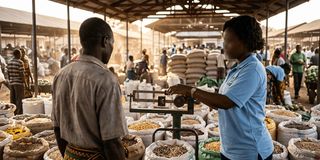
The next chapter of Tanzania’s agricultural story will be written by the strength of our markets.
The evidence is encouraging. Between the 2023/24 and 2024/25 financial years, exports of regulated crop produce increased from 1.75 million tonnes, valued at Sh6.06 trillion, to 1.99 million tonnes, valued at Sh6.32 trillion.
That represents a 14 percent increase in export volume and a 4 percent increase in export value in just a year.
These figures reflect growing confidence in Tanzanian produce and the expanding opportunities available to our farmers through agribusinesses.
Technology is also changing how agricultural markets operate. Between 2024 and 2025, the volume of produce traded through digital commodity auctions increased from 268.8 million kilogrammes to 713.6 million kilogrammes, while the value of transactions rose from Sh896.9 billion to Sh1.4 trillion.
These are more than impressive statistics. They demonstrate that transparent, efficient and technology-driven market systems can unlock commercial opportunities across agricultural value chains.
Yet markets are about more than buying and selling. They create confidence.
When farmers know where to sell, investors trust the business environment, processors secure reliable raw materials and exporters consistently meet quality standards, agriculture becomes a stronger driver of economic growth.
Efficient markets create the conditions for investment in agro-processing and value addition, allowing Tanzania to move beyond exporting raw produce towards higher-value products that generate greater incomes, employment and export earnings.
This is the direction envisioned in both the Agricultural Master Plan 2050 (AMP 2050) and Dira 2050. Their shared ambition is to transform agriculture into a modern, competitive and commercially driven sector that contributes to industrialisation, job creation and inclusive economic growth.
That transformation also requires us to rethink where value is lost.
Every year, considerable resources are invested in increasing agricultural production. Yet poor handling, inadequate storage, limited processing capacity and weak market linkages continue to erode the value of what farmers produce.
Dira 2050 places value addition and agro-processing at the centre of Tanzania’s agricultural transformation because they enable the country to retain more value domestically, strengthen agro-industries, diversify exports and increase producer incomes. Reducing post-harvest losses is therefore not simply a food security objective; it is an economic imperative.
Equally important is ensuring that agriculture remains attractive to young people. With more than one-third of Tanzania’s population aged between 15 and 35 years, harnessing the energy, innovation and entrepreneurial potential of this generation will be critical to achieving the aspirations of Dira 2050. Modern agriculture extends far beyond primary production.
It encompasses digital technologies, mechanisation, logistics, quality assurance, value addition, finance and international trade, creating diverse opportunities for decent employment, innovation and enterprise that can drive the sector’s long-term competitiveness.
As Tanzania embarks on implementing Dira 2050, our responsibility extends beyond increasing production.
It is about creating an enabling environment where efficient markets, value addition, agro-processing, digital innovation and strong institutions work together to enhance competitiveness, create jobs and improve the livelihoods of Tanzanians.
The progress recorded over the past two financial years demonstrates that Tanzania is moving in the right direction.
The challenge now is to consolidate these gains and accelerate the reforms that will define the future of our agricultural sector.
A task greatly handed to institutions like the Cereals and Other Produce Regulatory Authority and the likes of the Coffee, Cashew, cotton, sisal boards.
Ultimately, the success of Tanzania’s agricultural transformation will not be measured solely by the quantity we produce, but by our ability to add value, stimulate private sector investment, build competitive markets and value chains, and improve the prosperity of our farmers and the nation.
Irene Madeje Mlola is a development finance expert currently serving as the Director General of the Cereals and Other Produce Regulatory Authority (COPRA) in Tanzania