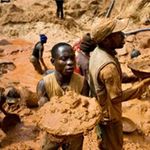
Tanzania’s mining sector: Progress made, but is local content delivering?
By Baraka Thomas
Tanzania’s mining sector has, for years, stood as a symbol of promise-a sector rich not only in gold, gemstones, and strategic minerals, but in the hope of broad-based economic transformation.
From policy documents to political speeches, the message has been consistent: our natural wealth must translate into national prosperity.
Yet, the recent Performance Audit Report by the Controller and Auditor General (March 2026) on the management of local content provisions in the mining sector forces us to confront a difficult question-are Tanzanians truly benefiting from their own resources?
At first glance, the story appears encouraging. Local employment in the mining sector has increased by an impressive 171 percent between 2020 and 2024.
Institutions have been established, guidelines developed, and systems introduced. The Mining Commission has appointed local content focal persons, and the National Economic Empowerment Council (NEEC) has issued multisectoral guidelines. On paper, the architecture of local content governance exists. But beneath this progress lies a more troubling reality.
Growth without transformation
The audit reveals that while Tanzanian employment has increased, foreign employment has also risen by 63 percent over the same period. This parallel growth tells a deeper story-not of replacement or empowerment, but of coexistence without transition.
The expectation of local content policy is not merely participation, but progression: that Tanzanians gradually assume technical and managerial roles currently held by foreign experts.
Instead, what we see is stagnation in critical areas. Foreign employees continue to dominate high-skilled and managerial positions, and more significantly, they earn considerably higher salaries than their Tanzanian counterparts in similar roles.
This is not just an economic issue-it is a structural one. It signals weak succession planning, inadequate skills transfer, and failure to build long-term local capacity.
In procurement, the imbalance is even starker. Between 2020 and 2024, only 33 percent of procurement was sourced locally, compared to 67 percent from foreign suppliers.
This means that the bulk of mining-related economic activity-contracts, services, and supply chains-continues to benefit external actors rather than domestic enterprises.
If local content is meant to anchor economic sovereignty, then these figures suggest that Tanzania is still operating at the margins of its own mineral economy.
A system without teeth
One of the most striking findings of the audit is not merely the existence of gaps, but the systemic nature of those gaps. The Mining Commission, the key regulatory body, appears to lack both the capacity and the systems necessary to effectively enforce local content requirements.
Consider this: out of 1,736 approved Local Content Plans in the 2024/25 financial year, only 24 audits were planned. Over a five-year period, only 54 audits were conducted across more than 4,000 approved plans a coverage rate of less than 2 percent. This is not oversight; it is near absence.
Without regular audits, local content plans risk becoming procedural formalities rather than enforceable commitments. Companies may submit plans, but without verification, there is little assurance that those plans are implemented in substance.
Even more concerning is the lack of proper documentation and record-keeping. The audit notes that none of the reviewed Local Content Plans had evidence of submission dates. Approval processes were delayed by up to 330 days. In some cases, incomplete plans-lacking key components such as technology transfer sub-plans, were approved without comment.
This points to a regulatory environment where compliance is neither rigorously checked nor consistently enforced. In such a system, even well-designed policies struggle to produce meaningful outcomes.
The missing link: Capacity development
Local content is not just about regulation-it is about readiness. Tanzanian firms and workers must have the skills, technology, and institutional support necessary to compete and participate effectively. Here, too, the audit paints a sobering picture.
Training programmes in the mining sector have largely focused on operating existing equipment rather than fostering innovation or technological independence. Technology transfer remains limited, and there is no comprehensive national plan guiding this critical process.
Value addition-a key pillar of industrialization remains underdeveloped. Local value addition stands at 53.8 percent for metallic minerals and just 38.7 percent for gemstones.
This suggests that a significant portion of Tanzania’s mineral wealth continues to be exported in raw or minimally processed form, with higher-value activities taking place elsewhere.
Equally troubling is the lack of coordination among key institutions. The Ministry of Minerals has not effectively collaborated with entities such as the Ministry of Industry and Trade or research institutions to promote local value addition.
Nor has it established a comprehensive database of local suppliers, a basic tool for linking mining companies with domestic businesses.
In the absence of such coordination, opportunities for local participation are not just missed-they are structurally excluded.
Governance gaps and weak accountability
Effective local content management requires strong monitoring and accountability mechanisms. Yet, the audit finds that both the Ministry of Minerals and NEEC have fallen short in this regard.
Monitoring frameworks are either weak or non-existent. Reporting is inconsistent, with NEEC receiving only 8 percent to 24 percent of required reports from sectors. Without reliable data, oversight becomes guesswork.
More fundamentally, there is a lack of legal enforceability. Neither the Ministry nor NEEC has sufficient legal mandates to compel reporting or ensure compliance. This creates a system where obligations exist, but consequences do not.
Coordination, too, remains a challenge. NEEC held only 2 out of 10 planned coordination meetings over four years and participated in just 12 percent of strategic investment negotiations. This limited engagement reduces the ability of the government to embed local content requirements at the negotiation stage where they matter most.
From policy to practice
The findings of this audit should not be read as a condemnation of intent. Tanzania has made genuine efforts to build a local content framework. The policies exist, the institutions are in place, and the vision is clear. But policy without implementation is aspiration.
The challenge now is to move from form to function-from having local content provisions to making them work. This requires several shifts.
First, enforcement must be strengthened. The Mining Commission needs adequate resources, staffing, and systems to conduct regular audits and monitor compliance effectively.
Second, capacity development must be prioritized. This includes investing in skills, technology transfer, and industrial infrastructure to ensure that Tanzanians are not just present in the sector, but competitive within it.
Third, coordination must improve. Local content is inherently cross-sectoral, requiring alignment between ministries, regulators, and the private sector.
Finally, accountability must be enforced. Legal frameworks should be strengthened to ensure that reporting is mandatory and that non-compliance carries consequences.
A moment of choice
Tanzania stands at a critical juncture. The mining sector continues to grow, attracting investment and generating revenue. But growth alone is not enough. The true measure of success lies in whether that growth translates into jobs, skills, industries, and opportunities for Tanzanians.
The audit report is not just a technical document it is a mirror. It reflects both our progress and our shortcomings. The question is whether we are willing to act on what we see. Because in the end, the promise of local content is simple: that the wealth beneath our soil should build the future above it.
Baraka Masubo Thomas is the Energy, Mining, Finance and Investment Lawyer. He can be reached by an email [email protected]