Wellness Summit: Art of Living signs strategic MoU with Nobel Laureates to advance global peace education
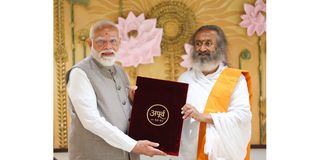
Honorable Indian Prime Minister, Narendra Modi (left) and The Art of Living founder, Gurudev Sri Sri Ravi Shankar at the event.
In 1981, Gurudev Sri Sri Ravi Shankar founded The Art of Living on a simple but ambitious belief: that a stress-free and violence-free society is possible.
Forty-five years later, that idea has evolved into one of the world’s largest volunteer-driven humanitarian movements, active across 182 countries and touching the lives of more than one billion people through programs focused on mental well-being, education, meditation, humanitarian service, and social development.
This week in Bengaluru, that global journey reached another milestone as The Art of Living International Centre hosted a month-long international gathering marking the 45th anniversary of the organisation and the 70th birthday of its founder, Gurudev Sri Sri Ravi Shankar.
The celebrations brought together an influential assembly of heads of state, diplomats, policymakers, educators, Nobel-affiliated institutions, spiritual leaders, and entrepreneurs, alongside civil society representatives and grassroots beneficiaries from around the world.
The global significance of the Bengaluru gathering was underscored by the participation of Indian Prime Minister Narendra Modi, who joined Gurudev Sri Sri Ravi Shankar during the celebrations to inaugurate the newly constructed Dhyan Mandir.
This international meditation and wellness centre is envisioned as a permanent space dedicated to peace, reflection, and collective well-being. Referring to the new facility, Prime Minister Modi stated that the Dhyan Mandir would become a “centre of peace and solace for thousands of people in the coming generations,” while speaking extensively on the link between spiritual well-being, mental resilience, and national development.
“The realization of a developed future will be possible through youth who are mentally calm, socially responsible, and sensitive toward society,” Prime Minister Modi told the gathering, adding that spiritual well-being, yoga, and meditation play a critical role in this journey.
He further highlighted the importance of public participation in addressing social challenges, asserting that society is more powerful than politics and that no system can succeed without people actively shaping their own future.
During the event, Prime Minister Modi launched a series of nationwide humanitarian and development initiatives led by The Art of Living. These projects include rural development, environmental sustainability, women’s empowerment, telemedicine outreach, youth development, and an expansion of prison rehabilitation efforts. Beyond the ceremonial aspects, the gathering reflected a growing global conversation around mental well-being, social harmony, ethical leadership, and the role of inner resilience in shaping public life.
A defining moment of the celebrations was the signing of a strategic Memorandum of Understanding (MoU) between The Art of Living Foundation and the Asia General Office of the Permanent Secretariat of the World Summit of Nobel Peace Laureates. This partnership aims to advance global peace education and youth leadership through an international framework titled Leading by Example, developed in collaboration with Nobel Peace Laureates.
The initiative seeks to connect students, educators, and young leaders with international peace building efforts through seminars, leadership workshops, ‘PeaceLabs’, and institutional partnerships. Under the agreement, The Art of Living will conduct outreach among universities and academic institutions to implement this curriculum globally. The Leading by Example curriculum draws upon 15 years of collaboration and focuses on preparing students for meaningful participation in civic engagement and international cooperation.
The curriculum addresses critical subjects such as conflict resolution, non-violence, humanitarian leadership, international relations, and environmental sustainability. Students in the program will engage in webinars with Nobel Peace Laureates and global experts, participating in round-table discussions designed to address real-world challenges. The partnership also envisions identifying delegations of youth leaders and academicians to contribute to future editions of the World Summit of Nobel Peace Laureates.
This announcement reflected a broader theme of the Bengaluru celebrations: the recognition that modern education must extend beyond academics to include emotional resilience and human values. This sentiment was echoed by former Japanese Minister of Education, Hakubun Shimomura, who described The Art of Living as a “model for holistic human development”.
“Through breathing techniques, meditation, and selfless service, The Art of Living has brought peace to individuals and harmony to communities across cultures,” Shimomura remarked. He stressed that true education is about cultivating character and compassion rather than just acquiring knowledge. Shimomura also reflected on the long-standing cultural and spiritual ties between India and Japan, noting that such gatherings strengthen international cooperation.
Among the most discussed initiatives was the organisation’s work in prison rehabilitation. As part of the anniversary, a global policy roundtable on prison reform is scheduled to bring together experts to examine approaches centred on rehabilitation, mental health, and human dignity within correctional systems. These discussions reflect a shift in global policy, where inner well-being and social trust are becoming central questions for institutions and governments alike.
For Gurudev Sri Sri Ravi Shankar, these conversations are deeply roote d in India’s spiritual heritage and its modern relevance. He reflected on the global spread of mindfulness, noting, “Go to the northernmost point of the world to Tromsø in the Arctic... people are meditating there... This is India’s heritage and today it is universally accepted”.
The international nature of the event was further highlighted by the participation of African leaders seeking collaboration in peacebuilding and social development. Among them was former African Union Chairperson Dr. Nkosazana Dlamini Zuma, who visited the centre alongside Ghanaian Special Envoy H.E. Ekwow Spio-Garbrah.
“I actually regret why I didn’t come earlier in my life here,” Dr. Dlamini Zuma shared, noting the profound effect the visit had on her. She expressed hope for increased engagement across Africa, stating, “We would like to have peace because only when there is peace you can really develop the continent... let’s work together to silence those guns”. The delegation explored avenues for collaboration in youth empowerment and community resilience to address the “African paradox” of a resource-rich continent still facing persistent poverty and conflict.
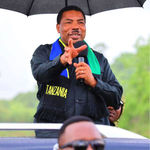
During the celebrations, Gurudev received special recognition from Accra Metropolitan University, Ghana, for his contributions to peace, education, and ethical leadership. The event also saw participation from Tanzanian entrepreneur and humanitarian Moe Hemani, founder of Every Living Thing. Hemani joined discussions on compassion-driven leadership and community impact initiatives.
As the celebrations continuous, major moments such as the Global Meditation for World Peace brought together participants from multiple countries both physically and online.
Forty-five years after its founding, The Art of Living occupies a unique space at the intersection of spirituality, public policy, and humanitarian action. What began as a movement centred on breath and meditation has expanded into a global force for leadership, ethics, and social responsibility.
In a world shaped by stress and uncertainty, the Bengaluru gathering served as a reminder that inner peace and human values may hold the key to the future of societies themselves.