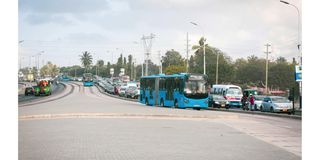
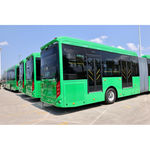
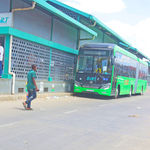
Dar es Salaam. The government has commissioned feasibility studies in four major cities to guide future transport infrastructure and help reduce compensation costs ahead of the planned expansion of Bus Rapid Transit (BRT) system.
The studies are expected to provide technical support to the Dar es Salaam Rapid Transit Agency (Dart) which is expectedd to become a fully mandated authority, responsible for the BRT execution in Tanzanian cities.
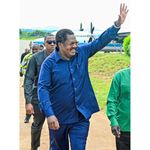
Dart’s Chief Executive, Mr Saidi Tunda said the studies will also help long-term planning aimed at improving public transport services and keep infrastructure development costs manageable as cities continue to expand.
The move comes at the time when the government is preparing a law to be called Urban Mass Transit Authority Act (UMTA) which will give the Dart a full power to expand the BRT services to cities other than Dar es Salaam. The studies are currently being conducted in Arusha, Mbeya, Mwanza and Dodoma as part of broader plans to expand organised mass transit systems across the country, Mr Tunda said.
He explained that planners are examining how transport corridors can be recognised and protected early enough to avoid costly compensation claims that frequently slow down infrastructure projects.
“In some cities such as Dodoma, land was already set aside for this type of infrastructure during earlier planning stages. This will significantly reduce, or in some cases eliminate, compensation costs,” he said.
Mr Tunda noted that early lane reserves remain one of their most effective ways to control rising costs associated with urban transport expansion particularly in fast growing cities where informal settlements have already developed along key routes.
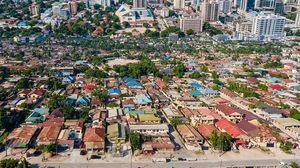
“In cities where expansion at surface level would be difficult due to dense settlement patterns, the studies will also suggest the possibility of underground transport systems,” he said, adding that although such systems require significant investment at the construction stage, it could prove more cost-effective over time while improving safety and operational efficiency.
“Underground corridors will also protect bus infrastructure from interference by other road users, including boda bodas, which sometimes enter restricted lanes and disrupt services,” he said.
According to him, adopting a mix of surface and underground solutions depending on the geographic location of each city could help Tanzania build more resilient and efficient urban mobility systems as urban populations continue to grow rapidly. Mr Tunda also revealed that the draft of the legislation is still being refined and reviewed to ensure it’s comprehensive and avoids gaps that could create implementation challenges in the future. He said the ongoing reviewing of UMTA is informed partly by lessons emerging from the implementation of the Dar es Salaam BRT project, which continues to provide practical experience for planners and policymakers.
“We expect the new legislation to be ready in the 2026/27 financial year, enabling us to establish a fully mandated authority and begin extending services to other regions,” he said.
According to him, the framework will play a central role in coordinating urban public transport systems across major cities, supporting long-term efforts to improve mobility, reduce congestion and make daily travel easier for thousands of commuters.
Transport expert from the National Institute of Transport, Mr Prosper Nyaki, urged authorities to conduct comprehensive feasibility studies on the design of the BRT stations, as well as social and economic viability, before rolling out the transport system in additional cities to avoid mistakes experienced in the Dar es Salaam project.
“Experts must study cost-effective BRT station designs that reflect the real number of passengers expected. Stations should not be unnecessarily large like some of those in Dar es Salaam, where passenger numbers have not always matched the scale of the infrastructure,” he said.
Mr Nyaki also stressed the importance of economic feasibility studies to identify key activities likely to be stimulated along proposed corridors, including industries, banks and markets, while assessing whether local government authorities have reliable revenue sources to sustain operations after implementation.
He added that social feasibility assessments are equally important, as they help determine how effectively the system will improve mobility and accessibility, enabling residents to reach workplaces, hospitals and markets more easily.
This is about improving mobility and accessibility so that people can move easily and reach opportunities and essential services efficiently,” he explained.
Another expert in the transport sector who did not want to be named, suggested that selection should be guided by detailed mapping of existing developments along proposed corridors to minimise displacement and avoid unnecessary compensation claims.
“Early identification of affected properties and close coordination with local government authorities can significantly reduce compensation costs and speed up project execution,” the expert explained.
He also emphasised the importance of improving road infrastructure before introducing BRT systems, noting that constructing quality trunk and feeder roads in advance would strengthen operations and service reliability.
According to the 2024/25 Controller and Auditor General’s reports, thousands of people affected by government infrastructure projects were yet to receive compensation amounting to Sh91.94 billion.
Register to begin your journey to our premium contentSubscribe for full access to premium content