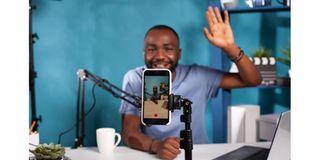
How content creators decide Tanzania’s next hit

What you need to know:

  • Today, before some songs reach radio playlists, they first find life on platforms such as TikTok

For decades, the formula for creating a hit song in Tanzania was almost predictable.

An artiste would spend weeks moving between radio stations, meeting presenters, submitting songs to DJs and hoping that enough airplay would convince listeners to embrace the new release.

A song that received frequent rotation on radio had a better chance of becoming popular, while a DJ playing the song at clubs and entertainment events could determine whether it became a favourite among crowds.

However, the rise of social media has changed the way music travels, introducing a new group of influencers who were not traditionally part of the music industry but are now playing a major role in deciding which songs capture public attention.

Today, before some songs reach radio playlists or dominate nightclub sessions, they first find life on platforms such as TikTok, where content creators transform short sections of songs into challenges.

One example of how this new system works can be seen through the success of songs such as ‘Ngedere’ and ‘Nilipe’ by Click Master, a musician who is also a producer and content creator.

Although the quality of the songs played a major role in attracting listeners, their visibility increased significantly after becoming popular sounds used by different creators on TikTok, where users created challenges and videos that made the songs familiar to a wider audience.

For Click Master, the secret behind a successful digital campaign begins with the music itself before promotion takes place.

“Personally, I like investing in TikTok challenges, but I also focus on the creativity that I bring into my music because the song itself must have something that attracts people,” he says.

He believes that while social media has created new opportunities for musicians, it cannot replace the importance of producing quality music because audiences will eventually reject songs that fail to connect emotionally.

“If the song is not good, people will not move with it. The music has to be strong, and then you support it with the right promotion. Promotion alone cannot make a weak song successful,” he adds.

According to Click Master, the relationship between artistes and creators is not always based on financial agreements, as some creators participate because they genuinely enjoy a song and want to share it with their followers.

“Sometimes you have to pay people, but sometimes it comes naturally because there are people who love your work,” he explains.

The same trend has been experienced by hip-hop artiste Mussa Mabumo, popularly known as Bando Mc, whose songs including ‘Sir God’ and ‘Naomba Tuongee’ gained popularity among audiences through digital platforms.

For Bando Mc, the rise of creators has not changed the basic rule of making music, it has only changed how good music reaches people.

“When a song is good, it becomes easier even for content creators to make challenges around it and help the song reach more people,” he says.

He explains that although radio and DJs remain important parts of music promotion, creators provide artistes with quicker feedback because they can immediately see how audiences are responding through views, comments and streaming numbers.

“We have not stopped taking songs to radio stations, but when you give your song to a creator, you can quickly see the response,” he says.

The growing influence of creators has also changed how audiences discover music.

Instead of depending only on radio programmes, many young listeners now spend hours scrolling through TikTok, Instagram Reels and other digital platforms, where they often encounter songs without even knowing the artiste behind them.

A person may first hear a song through a comedy video, a dance challenge or a lifestyle clip before later searching for the full version on streaming platforms.

For content creator Asha Mallya, choosing music for online content has become part of storytelling because the right song can determine how audiences respond to a video.

“When I use the right song, people stay longer. If people love the sound, they ask about it in the comments, and before you know it, thousands of others are using the same audio,” she says.

This influence has turned content creators into important music promoters despite many of them having no direct connection to the recording industry.

Their choices increasingly influence which songs people dance to, quote, stream and even adopt as part of everyday conversations.

Recognising this shift, artistes and record labels have started changing their marketing strategies by allocating resources towards digital campaigns and collaborations with creators who already have strong relationships with audiences.

Music marketer Brian Steven says the advantage of creators is their ability to reach specific communities faster than traditional advertising methods.

“It is simply about where the audience is. You can spend millions buying radio airtime, or you can work with creators whose combined audience reaches millions of followers,” he says.

The impact of social media has even reached the creative process itself, with some artistes and producers now thinking about how songs will perform online before they are released.

Bongo Flava artiste Atan says musicians have started paying more attention to memorable lyrics and sections of songs that audiences can easily use in videos.

“Sometimes we ask ourselves, ‘Which lyric is going to become the caption?’ That is something artistes never used to think about before,” he says.

Despite the growing influence of digital platforms, DJs believe their role has not disappeared because online popularity does not always guarantee success in real-life entertainment spaces.

Radio DJ Salam Salmin says the industry has experienced a major transformation because many songs now become popular online before reaching traditional platforms.

“Before this digital era, radio used to break almost every major hit. If a song was not on radio, many people did not know it existed,” he says.

However, he admits that today he often discovers songs through social media before receiving them from promoters.

“I open TikTok and hear one sound everywhere. Then by the weekend people are requesting that song in clubs and on radio,” he says.

Although trends can create excitement, Salam believes DJs remain important because they test whether a song can truly connect with audiences.

“A trend makes people curious, but the dance floor tells you whether it is actually a hit,” he says.

As the music industry continues to evolve, the creation of a hit song is no longer controlled by one group of people.