BRT Phase 2 trial runs finally begin amid optimism, anxiety

Dar es Salaam. If you thought the launch of Phase II of the Dar es Salaam bus rapid transit (BRT) would push minibuses, bajajis and motorcycles out of business, then you may need to think again.

The start of BRT services along the Mbagala–Kilwa corridor appears set to complement, rather than replace, other modes of public transport used by thousands of commuters travelling between the city centre and the densely populated Mbagala area.
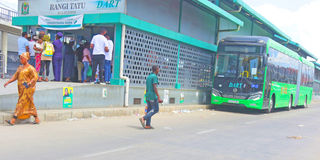

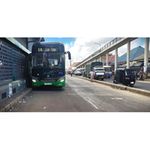
A BRT bus during trial runs on the Phase 2 route between Gerezani and Mbalaga in Dar es Salaam yesterday. The trials began two years after the necessary infrastructure was completed. PHOTO | CORRESPONDENT


Residents and operators of minibuses, bajajis and motorcycles who spoke to The Citizen yesterday described the launch as a “vital complement” to their businesses.

In line with its earlier announcement, the BRT officially began passenger trials along the Mbagala–Kilwa route at the weekend.

Chief government spokesperson Gerson Msigwa confirmed yesterday that the trial runs, conducted by Mofat Company, had started two days earlier and had now advanced to include passengers.

“The trials began on Saturday when the buses operated without passengers. Today they have started carrying passengers. We will continue in this phase while gradually increasing the number of buses on the route,” he said.

Phase II of the BRT involves 250 buses operated by Mofat Company under a 12-year contract. All buses are powered by natural gas, aligning with the government’s commitment to cleaner and more sustainable urban transport.

The launch of the Mbagala route marks a major milestone in efforts to ease congestion and improve commuting efficiency in Dar es Salaam.

Officials say the new BRT phase will significantly cut travel time between Mbagala and the city centre, offering a reliable and environmentally friendly alternative to conventional public transport.

However, local transport operators are optimistic that the new service will not edge them out of business. They believe demand for transport in Mbagala is simply too high for the BRT alone to handle.

Speaking to The Citizen, the treasurer of the Mbagala Rangi Tatu bodaboda station, Mr Said Khamis, said the system’s launch was long overdue.

“We don’t see the BRT as competition. It has come to fill the gaps in public transport. Mbagala has many passengers and even after using the BRT, they still need to reach their homes. That’s where we come in to complete the journey,” he said.

Mbagala serves as a vital transport hub linking several wards within Temeke District including Mbagala Kuu, Chamazi, Charambe, Toangoma, Mianzini, Kiburugwa and Kijichi.

It is also a hub that links residents of Msongola and those as far as Zingiziwa and Chanika in Ilala District as well as those from Mkuranga, Mwandege, Vikindu and Vianzi wards in Mkuranga District, Coast Region.

“The BRT ends at Mbagala, so we’ll still be required to ferry people to and from nearby areas. That means there’s still plenty of business for us,” he added.

A bajaji driver, Mr Shafii Mtiba, shared similar views, saying that while they may initially lose some long-distance passengers, new opportunities were opening up.

“In the mornings, we usually take many people to town, so that might change. But now we’ll focus on local routes, taking passengers from BRT drop-off points to their homes. It’s about working together to serve the people,” he said.

Mr Khamis said that bodaboda riders were being reminded to observe traffic rules, particularly avoiding exclusive BRT lanes to ensure the system operates smoothly.

For a small trader and long-time Mbagala resident, Ms Sharifa Yusuph, the BRT launch brings relief after years of unreliable transport. However, she cautioned against repeating past mistakes such as irregular schedules and long waits.

“Transport here has always been a major challenge, especially during peak hours. If the government is serious, this system should serve people reliably, not just become another political statement,” she said.

Commuters who boarded the new BRT buses also expressed optimism mixed with concerns.

A resident of Mwandege in Mkuranga District, Mr Juma Abdul said his trip from Mbagala to Gerezani yesterday was impressive but noted operational issues.

“I waited almost an hour for the bus at Mbagala Rangi Tatu Station since only a few have been deployed so far,” he said.

Abdul observed that some passengers queued for long periods to buy electronic payment cards needed for access to BRT stations.

“Many waited until the last minute because the launch had been postponed several times, so they were unsure it would really start. Some even paid others with cards to get access,” Mr Abdul said.

With the services still new, several bajajis and motorcycles were still observed plying the BRT lanes as of yesterday, something that will have to cease as services proceed.