Madeleka: Why Tanzania’s growing terror cases could scare off investors, AFCON guests

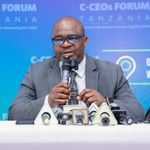
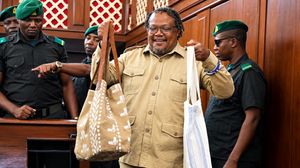
Independent advocate and politician, Mr Peter Madeleka

Dar es Salaam. Independent advocate and politician, Mr Peter Madeleka, said Tanzania must adopt a clear stance on security matters, warning that the proliferation of terrorism charges damages the country's international image.

The legal practitioner and civil rights defender noted that as more terrorism cases are brought before the courts, the country increasingly comes across as one facing a terror threat, posing risks to the nation's reputation.
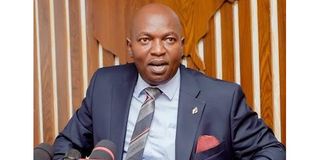
Mr Madeleka made the observations during an exclusive interview with The Citizen’s sister newspaper, Mwananchi, held recently at his office in Dar es Salaam, amid several ongoing terrorism cases in various courts across the country involving citizens and cadres of the opposition political party, Chadema.

Among these is a case filed on August 4, 2026, involving 17 Chadema cadres at the Shinyanga Resident Magistrate's Court, with similar charges pending in Mwanza and Mbeya.

He expressed concern over conflicting public statements from key government officials, where some acknowledge terror-related proceedings while others deny the presence of terrorism in the country.

“When we are told there are terrorism cases in the Resident Magistrate Courts of Mwanza, Shinyanga, Iringa, and Mbeya, and then later told there is no terrorism, that is where fundamental questions arise,” he said.

He noted that the presence of these cases triggers debate on how the government communicates with the public regarding such sensitive matters.

“How can you have terrorism cases in court within a country that has no terrorism? If there is no terrorism, how do these terrorism cases exist?” he questioned.

He advised that state institutions overseeing law and security maintain a unified narrative to prevent confusion among citizens and international partners.

“The DPP (Director of Public Prosecution) is part of the government. The Minister for Home Affairs is part of the government. The Inspector General of Police is part of the government. Yet at times, they appear to speak different languages,” he stated.

Mr Madeleka emphasised that the issue should not be viewed through a political lens, but rather through its potential impact on the nation's standing with foreign investors and the international community.

He remarked that terrorism is viewed with extreme gravity globally due to its severe implications for human life and national security.

“This is not a petty chicken theft offence. Terrorism is a grave charge linked to national security and public safety,” he stated.

Elaborating further, he noted that domestic anti-terrorism laws do not recognise an offence termed "indicators of terrorism," a phrase occasionally used in political rhetoric.

“We were told there is no terrorism, only indicators. Anti-terrorism law does not treat indicators of terrorism as an offence; the law strictly deals with acts of terrorism,” he said.

He added that individuals brought before the courts face actual charges of terrorism rather than accusations of exhibiting signs or hints of it.

“You cannot prosecute someone for the smell of terrorism. The charge sheet explicitly reads 'terrorism'. That is why I urge caution when discussing this matter,” he said.

Mr Madeleka asserted that if the government maintains that Tanzania is free of terrorism, that stance ought to align with realities observed within the criminal justice system.

“If you claim terrorism is non-existent, citizens will naturally ask what offence those currently in court are being charged with. That is the fundamental question,” he noted.

The advocate added that this debate carries heightened weight as Tanzania prepares to co-host the Africa Cup of Nations (AFCON) in 2027.

He stressed that preserving the country's national image is vital for welcoming international guests, tourists, and investors expected during the tournament.

“No one wishes to see Tanzania portrayed as a nation facing a terrorism problem, especially as we prepare to host thousands of visitors from around the globe,” he said.

Perspective on reconciliation

Beyond the security debate, Mr Madeleka addressed calls for political reconciliation recently championed by select political and religious leaders.

The politician stated that he has yet to receive a satisfactory explanation regarding the practical meaning of reconciliation within the current Tanzanian context.

He argued that before initiating any reconciliation process, stakeholders must first clearly define the specific problem to be resolved and identify the participating parties.

“Reconciliation should not be used merely as a political slogan. When someone calls for reconciliation, they must first clarify reconciliation over what, and reconciliation with whom,” he said.

He described those two questions as essential for determining whether a genuine need for reconciliation exists.

“To hold reconciliation, you must have an established problem. What is the problem? Who caused it? And what corrective steps have been taken?” he asked.

He noted that members of the general public have not been given a clear explanation of what reconciliation means within political discourse.

“If you ask a street vendor or a food seller what reconciliation means, many will not understand what politicians are talking about,” he said.

Mr Madeleka asserted that ordinary citizens primarily seek justice, truth, and accountability regarding matters that affect their daily lives.

He noted that several families still carry grief from past events in recent years.

“There are people who lost relatives, those who lost children, and those who endured various forms of suffering. These are the matters that require answers first,” he said.

He stressed that genuine reconciliation cannot be established before the truth behind those events is uncovered and justice is served for those affected.

On public commentary, he explained that his personal philosophy regarding the critique of leaders and public institutions centres on constructive arguments and light humour rather than insults.

“Criticism is not abuse. Criticism is not shouting. Criticism is an argument intended to correct errors where they exist,” he said.

He noted that leaders being criticised deserve respect, as the goal is not character assassination, but assisting them in identifying areas requiring administrative correction.

He added that respectful critique is far more likely to be heard and acted upon than attacks driven by emotion and personal grievances.

Mr Madeleka observed that this approach aligns with calls encouraging Tanzanians to debate constructively, respect one another, and avoid unproductive conflicts.

“I want my criticism to be heard, received, and acted upon. If I insult someone, they may ignore the argument entirely,” he said.

He concluded that the nation needs to foster a culture of mutual listening, even amidst big political differences.

According to him, a resilient democracy is built on reasoned debate, mutual respect, and the capacity of both leaders and citizens to accept constructive criticism.

“Criticism is part of nation-building. We may differ in opinion, but we must not lose our humanity, our respect, and our Tanzanian identity,” said Mr Madeleka.