Tanzania told to keep politics out of state owned firms
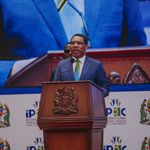
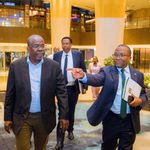
Finance and Planning minister Philip Mpango
What you need to know:
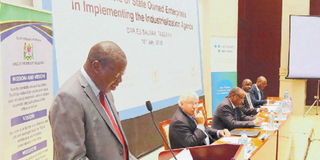
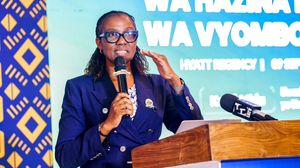
Speaking during a roundtable discussion in Dar es Salaam, the experts faulted the appointment of politicians to managerial positions in the enterprises.
Dar es Salaam. Experts yesterday spoke out against the role politics was playing in the running of state-owned enterprises (SOEs).
They also offered proposals on how to turn SOE’s around and enable them deliver and contribute to economic growth.
Speaking during a roundtable discussion in Dar es Salaam, the experts faulted the appointment of politicians to managerial positions in the enterprises.
Organised by a local leadership think tank, Uongozi Institute, in collaboration with the Ministry of Finance and Planning through the office of the Treasury Registrar, the discussion was aimed at coming up with suggestions on how SOEs’ performance could be improved.
In his keynote presentation, Dr John Page of the Brookings Institute – an American research group – said political appointments tended to adversely affect performance.
“Not everyone who is good at politics is good at running a good business,” said Dr Page, who is a senior fellow in the Global Economy and Development Program at the Brookings Institute in Washington and a non-resident senior fellow of the United Nations University World Institute for Development Economics Research in Helsinki, Finland. However, Finance and Planning minister Philip Mpango said that the days when people were appointed to head business-oriented entities on political grounds were long gone.
“We don’t look at who someone is, but rather their abilities, which is a very fundamental issue. If you repeat mistakes made in the past, you fail to learn and you become prone to failure,” Dr Mpango said on the sidelines of the discussion.
Tanzania Private Sector Foundation (TPSF) executive director Godfrey Simbeye said separation of politics and expertise was crucial if SOEs were to thrive and share their profits with the government, adding that they should be independent of any political influence or interference.
“I have to be honest...politics is rampant (in SOEs),” he said.
Mr Simbeye said one way of drawing a clear line between SOEs and politics was to give their boards of directors the authority to recruit chief executives they think will drive the enterprises to profitability.
He cited as an example Ethiopian Airlines, which he said was completely independent of political influence, adding that this explains its impressive performance and significant contribution to Ethiopia’s economy.
Another example is the newly delivered Boeing 787-8 Dreamliner that was bought by the government and handed over to Air Tanzania Company Limited (ATCL) to operate.
He said instead of the agreement being signed by the Chief Secretary on behalf of the plane’s owner and ATCL, the permanent secretary in the Ministry of Transport signed on behalf of the national carrier.
“This is the kind of politics we are against,” Mr Simbeye told The Citizen on the sidelines of the dialogue, which brought together over 60 board chairpersons and chief executives of state-owned enterprises.
In his keynote presentation, Dr Page made a number of recommendations, including objectives of SOEs being clearly defined and investment in human resources made a priority. Others are improvement of the incentive system in which good work is rewarded and poor performance punished.
Other recommendations include the creation of a dedicated supervisory agency, reducing the number of SOEs, establishing good accounting systems and requiring regular and detailed reporting by SOEs.
Dr Page said that because the drivers of industrial location were interdependent, a comprehensive industrialisation strategy was essential.