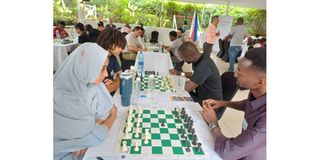
Poland Embassy hosts Chess tournament as Tanzania’s interest in the game grows

Dar es Salaam. The Embassy of the Republic of Poland in Tanzania hosted a two-day chess tournament on Saturday, February 7, 2926 that brought together local and international players, reflecting the growing interest in the game across the country.

Tournament Director Konrad Czernichowski coordinated the event, while Fide-certified arbiter Mustafa Ebrahim supervised the matches to ensure they were conducted in accordance with international standards.

Vice Chairman of the Tanzania Chess Association Rashid Mansour Sharif attended the tournament, signalling the federation’s support for efforts aimed at developing the sport. Head of Mission of the Republic of Poland in Tanzania Mr Sergiusz Wolski welcomed participants and guests, describing the event as an opportunity to strengthen sporting and cultural relations.

“Chess is a popular game in Poland with long traditions going back to the 19th century,” said Wolski.

“There are many clubs and many people playing as amateurs, but we also have professional players, some of whom are very successful and win world tournaments.”

Mr Wolski, who also competed in the tournament, acknowledged the high level of competition.

“Unfortunately, i haven’t played for a long time and the players are great, so it’s difficult to compete with them,” he said, while praising the overall quality of the tournament.

The event was co-organised with the Jordan University Chess Club and attracted players from several regions, including Dar es Salaam, as well as participants from outside Tanzania.

“I didn’t know that there was so much interest in chess here,” Wolski said.

“Today we have players from different places in Tanzania but also from outside the country. We are happy that we can contribute, even a little, to the development of the game in Tanzania through this tournament.”

He emphasised the importance of chess in education, particularly for children.

“I’m sure that it’s very beneficial if children play chess. It’s a very strategic game, so it can definitely contribute to the education and development of a young person,” he said.

Reflecting on his school years, he added: “When I was at school in Poland, there were chess clubs, and some children were very engaged. Chess develops strategic thinking and certain abstract skills.”

Mr Wolski noted that while chess should not necessarily be compulsory in schools, expanding access would benefit learners.

“I’m not saying it should be obligatory or on a mass scale, but it would definitely be beneficial to have more chess in schools,” he said.

Encouraging beginners, he added: “It’s never too late. The basics are simple. You can learn the moves of the pieces and pawns in one day.”ing the game to learning a new language, he said: “You can quickly master the basics and reach a point where you can communicate, but then it becomes more and more difficult. It’s the same with chess.”

The tournament brought together players of varying skill levels, promoted cultural exchange, and supported the continued growth of chess in Tanzania.