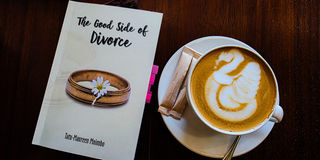
‘The Good Side of Divorce’ by Dr Tatu-Maureen Mnimbo: There’s no shame in starting over

What you need to know:

  • Mnimbo writes plainly about her own marriage and divorce and shares stories of other women with care and tenderness. It is not the failure of one woman; it is a pattern. This is important, especially in a place where divorce is something women are expected to survive in silence, if at all.
We raise girls to become wives before anything else. So that by a certain age, a woman who has not married has failed at the one task she was prepared for, and everyone is entitled to ask her why. And so she sometimes marries against her own judgement, because she is too tired of answering questions.

Then the marriage doesn't work, and she has a decision to make: save herself, or save the thing everyone was so happy she got into. For once, she chooses herself. How dare you leave the one thing that validates your worth as a woman? How dare you not fast and pray some more?

Mnimbo writes plainly about her own marriage and divorce and shares stories of other women with care and tenderness. It is not the failure of one woman; it is a pattern. This is important, especially in a place where divorce is something women are expected to survive in silence, if at all.
Our society has glorified marriage to the extent that some women would rather die than face what leaving costs them. The punishment for the woman who leaves is too much to bear. And often there is no choice at all: when the husband is the provider, leaving means not knowing how she and her children will live on the other side of divorce.

Jackline was worried that divorce would shame her family, so she lied about her bruises and said she had banged herself on a wall. The night she died, the neighbours heard her screaming, but no one came to save her.

She lied because she had been taught that the shame of leaving was worse than the danger of staying in a dead marriage. The neighbours stayed inside because they had been taught the same thing: that a marriage is a private matter. That a woman crying at night to ask for help is not an emergency. Nobody intervened because nobody had been raised to believe there was anything to intervene in.

“We’ve all been beaten. Some of us ended up in the hospital, but we never reported it. We stayed for the children, to preserve our dignity. All men are like that. It rains everywhere.” A professor told Mnimbo this when she told her she had left.

It saddens me how we have normalised this to the point where the woman who refuses it is the difficult one. The professor was not being cruel. She was being kind, in the only language she had, telling Mnimbo what she believed had kept her alive.

Mnimbo points to sisterhood as what actually carries a woman through, especially a divorce where emotional, physical and financial abuse were the reasons for leaving. Marriage for many women is identity. You have been a wife for years, and knowing what to do with that self once it is gone takes work.

The women in the book speak fondly of those who held their hands when they could no longer hold themselves up. They expected to be judged for what they had confessed, but instead they were held by other women. "Every time one woman spoke her truth, another woman found hers."

I owe my own healing from the things life has put me through to my friends. Not a divorce, just to be clear. But I knew how important my friends are in my life and how important my friendship is to other people. Women need women to survive.

The part everyone should read is part three, on the law. Mnimbo lays out the types of marriage and which law governs each, and why knowing which you are in decides what you can fight for. It is the book's practical spine, but I’m still thinking about the double standard she names. "Men who fight for property are considered responsible. Women who do the same are branded bitter, money-hungry, or dishonourable," she writes. How can the same act be considered honourable in one person and shameful in another?

I read this book page by page, and I still don't know how to get a divorce. I can't, because I am not married, and because the book is not about that. It is about the women in it, the ones who left everything to run for their lives, who went through the courts, the long healing, the understanding that the suffering was never normal, even though everyone treated it as though it were. Nobody marries to endure. And yet endurance is the whole training. Jackline died because of it. The professor survived it and called it rain. The least we can do is stop calling it normal.

Married or unmarried, you should read this book.

Jane Shussa is a digital communication specialist with a love for books, coffee, nature, and travel. She can be reached at [email protected]