Court to rule on case challenging legality of Samia’s election inquiry commission

Dar es Salaam. The fate of the case challenging the legality of the Presidential Commission of Inquiry into incidents of breaches of peace during the General Election of October 29, 2025 will be known today, as the High Court (Dar es Salaam Sub-Registry) delivers its ruling on the application for leave to challenge the commission.

In the ruling to be delivered today, Thursday, December 18, 2025, by Justice Hussein Mtembwa, the Court will focus on two key issues that were contested during the hearing of the application.
The first issue is whether the applicants have met the requirement of establishing the existence of a dispute or a contested issue that requires determination.

The second issue is whether, if the Court grants leave, allowing the filing of a substantive case to challenge the commission, such leave can operate as a stay, suspending the commission’s activities until the main case is determined.

The case arises from violence and destruction of infrastructure and property belonging to the public and private individuals, as well as deaths and injuries, following demonstrations held on October 29, 2025, in several cities and towns across the country.

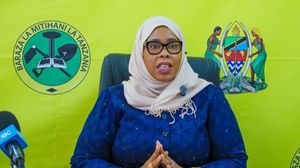
Following these incidents, on November 18, 2025, President Samia Suluhu Hassan appointed a commission to investigate the events before, during and after the election. The commission is chaired by retired Chief Justice of Tanzania, Mohamed Chande, and was officially launched on November 20, 2025.

However, on November 27, 2025, activists and human rights defenders Rosemary Mwakitwange, together with two advocates, Edward Heche and Deogratius Mahinyila, filed an application against the Attorney General (AG) and others.

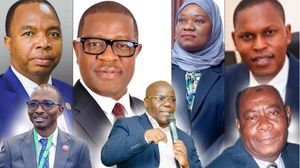
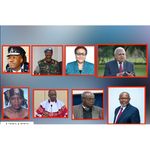
The other respondents are the retired Chief Justice Chande (the commission’s chairperson) and its members: retired Chief Justice of Tanzania Prof. Ibrahim Juma; retired Chief Secretary Ambassador Ombeni Sefue; Radhia Msuya; Ambassador Paul Meela; and former Inspector General of Police (IGP) Said Mwema.

Others include Ambassador David Kapya, a former Secretary-General of the Southern African Development Community (SADC); former Minister for Defence and National Service Stergomena Tax; and the Tanganyika Law Society (TLS).

According to the applicants, TLS, which was established in 1954 by an Act of Parliament, has core responsibilities that include promoting the rule of law, integrity and transparency, and protecting and assisting the public to access justice and legal services in all matters relating to the law.

The application, Miscellaneous Application No. 30210 of 2025, was heard on December 12, 2025. Counsel for the applicants, Mpale Mpoki, assisted by Advocate Hekima Mwasipu, told the Court that the applicants had satisfied all three legal requirements for the grant of leave.

The requirements include the existence of a contested issue requiring determination; filing the application within six months from the date of the decision intended to be challenged; and the applicants demonstrating that they have sufficient interest in the matter in dispute.

On the first requirement, Advocate Mpoki submitted that, upon examining the affidavit and the replying affidavit, it was evident that there was a contested issue, since the applicants had raised allegations which the respondents had denied while demanding proof.

He further referred the Court to Rule 7(6) of the Judicial Review Procedure Rules, which provides that once leave to file a judicial review application is granted, it operates as an order staying the implementation of the decision being challenged.

He argued that allowing the contested matter to proceed would render the case nugatory, and he cited various local and foreign court decisions in support of that argument.

The team of State Attorneys, led by Senior State Attorney Narindwa Sekimanga, assisted by Senior State Attorney Daniel Nyakia and State Attorney Erigh Rumisha, opposed the application on behalf of the AG, the chairperson and members of the commission.

They did not dispute the other two requirements, except the first one—whether there existed a disputed issue.

State Attorney Rumisha argued that the applicants had failed to prove that crucial requirement, claiming that the applicants’ joint affidavit was full of thoughts, opinions and viewpoints, as well as conclusions of their allegations, but lacked substantive issues.

Regarding the request to suspend the activities of the commission, Rumisha argued that the application was not supported by the applicants’ affidavit.

He further contended that where there is an issue of public interest, public interest should prevail over the interest of an individual.

TLS counsel, Ferdinand Makore, told the Court that they supported the application.

On the issue of staying the commission’s activities, Advocate Makore submitted that Rule 7(5) of the Judicial Review Procedure Rules empowers the Court, at the leave stage, to issue such an order depending on the circumstances.

In the application filed under a certificate of urgency, the applicants are seeking leave to file a judicial review application for orders of certiorari and prohibition to quash and restrain the President’s decision appointing members of the commission.

They are also seeking that the leave granted operate as an order staying the commission’s investigations until the substantive case challenging the commission is determined.

In the case, the applicants are challenging the legality of the commission, arguing that its establishment and the appointment of its members were done with improper motive, contrary to the principle of natural justice that no one should be a judge in his or her own cause.

“The appointing authority is the Chairperson of the ruling Chama cha Mapinduzi, the party that participated in and won the election that resulted in violence during and after the election, and therefore has an interest in the election and in the commission,” the applicants claimed.

They also alleged that member Stergomena Tax is a suspect, as she was the Minister for Defence and National Service at the time the election-related violence occurred and was involved in one way or another through her ministry.

They further claimed that retired Chief Justices cannot fairly investigate the violence because some of the destroyed property belongs to the judiciary they once headed, and that a retired IGP cannot impartially investigate because the serving IGP may be among the suspects.

They also alleged that the Commander-in-Chief, who is the appointing authority of the commission (the President), on different dates issued instructions to the Police and the Defence Forces to prepare for violence during and after the election.

As such, they argued that the commission members cannot investigate the authority that appointed them.

They further claimed that the establishment of the commission violated the provisions of the Commissions of Inquiry Act, Cap. 32 Revised Edition 2023, particularly section 16.

They argued that there was no clear statement of its objectives as required by that provision, but rather that they were based on perceptions, contrary to constitutional principles, good governance and due process.

They claimed that the phrase used—“investigation into incidents of breaches of peace”—downplays and trivializes deaths, missing persons, missing bodies, injuries and the overall serious impact on the public.

Another ground raised was that the commission is not independent.

They explained that it did not include members from independent professional bodies such as TLS, the Medical Association, civil society organizations, religious bodies or other independent stakeholders without conflicts of interest, in order to avoid bias in favor of the appointing authority.

They alleged that all members are retired public servants who previously held positions appointed by the President, and who took an oath of secrecy to the President, which had not been revoked upon retirement or by the date of their appointment as members of the challenged commission.